Prevent Future Hazards
Correct pruning stops weak, snap-prone branches from growing back.
We correct overgrown trees with professional height reduction and pruning that protects your property and tree health.
Servicing Eight Mile Plains and the Brisbane South corridor.
When people ask for tree lopping Eight Mile Plains residents usually want to reduce the size of a dangerous or overgrown tree. We achieve this through professional arboriculture.
In Eight Mile Plains, older trees often outgrow suburban yards. Instead of harmful lopping, we use AS4373-compliant reduction techniques to keep your yard sunny and safe during Brisbane storm seasons.
Correct pruning stops weak, snap-prone branches from growing back.
Avoid introducing rot and disease into massive lopping wounds.
A properly pruned tree requires far less maintenance than a constantly regrowing lopped tree.
We evaluate your tree to see if reduction or removal is the safest option.
Clear pricing with no hidden fees.
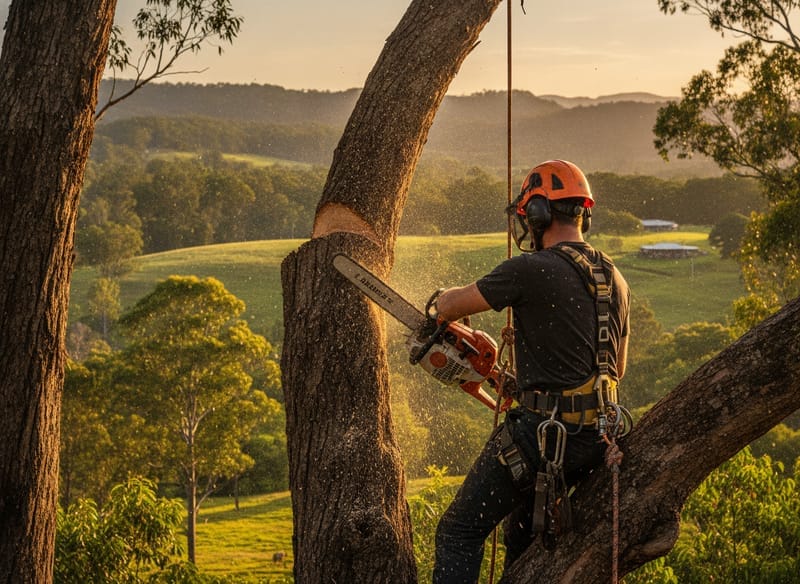
Our arborists climb and cut to AS4373 standards, not indiscriminate hacking.
All debris is chipped and removed from the Eight Mile Plains site.
If you are searching for professional Tree Lopping Eight Mile Plains, our team at Brisbane South Arborist is ready to help you manage your overgrown canopy the right way. We are a locally owned and operated business of highly trained arborists, and our trucks and climbers are a familiar sight in the suburbs and commercial precincts across the southern corridor.
Often, when locals ask us for "lopping," what they really need is targeted canopy reduction to make a large tree smaller, safer, and less intrusive. Whether you are dealing with a sprawling Moreton Bay fig encroaching on your roofline, or a towering hoop pine dropping heavy branches into your yard, we provide a safe, structured approach to reducing its size.
We understand the unique demands of Brisbane South properties. From the fierce summer storm seasons that stress large eucalypts to the strict Brisbane City Council vegetation regulations, our team ensures your trees are managed safely, legally, and sustainably. We do not just hack away at your trees; we use precise, scientifically backed pruning methods to achieve the size reduction you need while protecting the long-term structural integrity of your landscape.
One of the most common issues we face as arborists is repairing the damage caused by untrained, DIY loppers. In horticultural terms, "lopping" or "topping" involves making indiscriminate heading cuts across large branches or the main trunk, leaving massive stubs behind. While this might seem like a quick way to shrink a tree, it is disastrous for its health and your property's safety. When a tree is aggressively topped, it responds by rapidly pushing out epicormic regrowth—often called "water sprouts." These new branches grow incredibly fast but are poorly attached to the outer layers of the bark rather than the solid heartwood. When the next heavy Brisbane storm rolls through, these weak branches are the first to snap and crash onto roofs or fences. Furthermore, large lopping wounds rarely heal, inviting severe fungal decay and termites straight into the trunk. Our solution is fundamentally different. Instead of indiscriminate butchery, our qualified climbers utilize AS4373-compliant techniques to achieve the size reduction you are looking for. We perform careful reduction cuts at the branch collar, which allows the tree to compartmentalise the wound and heal correctly. This means you get a smaller, safer tree that retains its natural shape, resists disease, and won't drop dangerous regrowth on your home during storm season.
When clients ask us to make their trees smaller, they usually think of "lopping." However, to guarantee the survival and safety of your tree, we apply specific targeted pruning techniques as defined by the Australian Standards. Here is how our team achieves the results you want without compromising the tree.
This is the correct, AS4373-approved alternative to traditional topping. We selectively cut back leader branches to appropriate lateral branches (at least one-third the diameter of the branch being removed). This reduces the overall height and spread of the canopy without destroying the tree's natural structure or triggering dangerous epicormic growth.
When a tree's lower canopy is obstructing driveways, footpaths, or structures, we strategically remove the lower branches. This provides necessary vertical clearance—crucial for meeting local council requirements over street boundaries—while keeping the upper canopy intact and healthy.
Perfect for thick, heavy trees during storm season. We selectively remove secondary branches throughout the canopy to increase wind and light penetration. This significantly reduces the "sail weight" of the tree, allowing high winds to pass through harmlessly rather than acting as a parachute that could uproot the entire tree.
When you have specific branches causing problems—such as a heavy limb leaning directly over your roof, pool, or powerlines—our climbers target these exact areas. We use precise collar cuts to remove the risk without needlessly over-pruning the rest of the tree.
A critical safety measure. We safely ascend the tree to remove dead, diseased, or dying branches before they fail. Deadwood is incredibly unpredictable and poses a severe drop risk to people and property below.
Delivering exceptional results requires a structured, safety-first approach. When you book Tree Lopping Eight Mile Plains with our team, here is exactly what you can expect from start to finish.
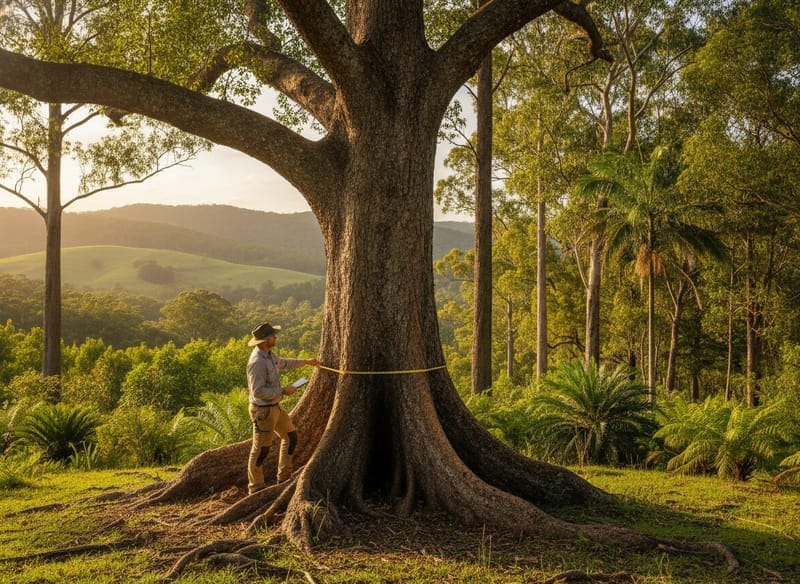
First, we conduct a comprehensive on-site assessment. One of our qualified arborists will inspect the tree, evaluate its health, identify the species, and listen to your specific goals—whether that is clearing a roofline or maximizing sunlight. We then provide a transparent, fixed-price quote outlining the exact AS4373 pruning methods we will use.
Next, we check local compliance. We verify if your property falls under any specific Brisbane City Council vegetation protection overlays, ensuring all work is 100% legal before any saws are started.
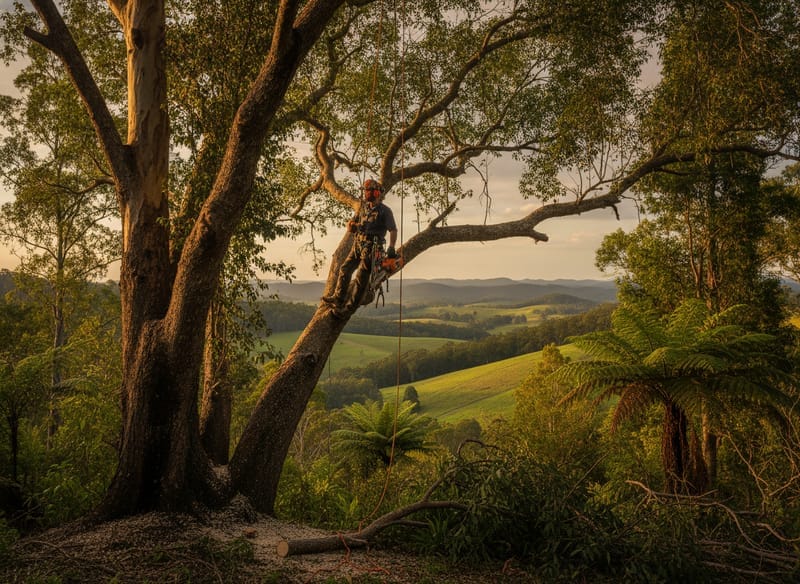
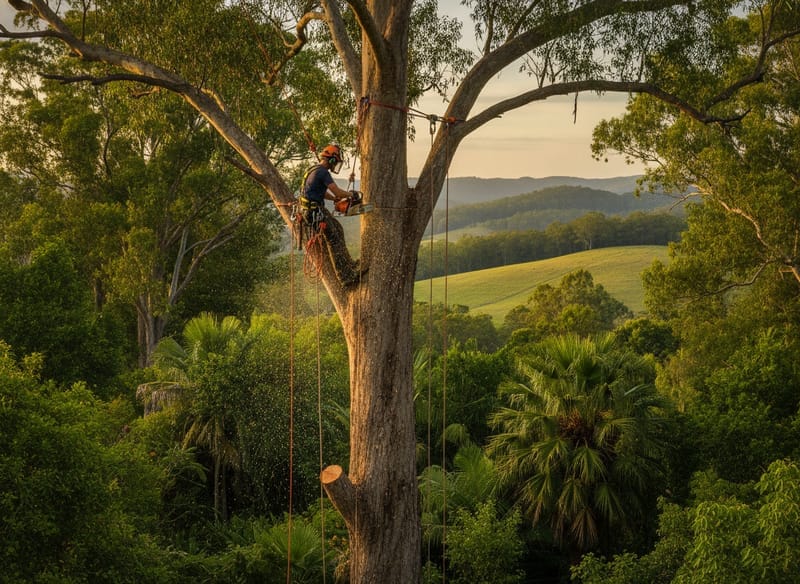
On the day of the job, our crew arrives with the right equipment for your specific block. Because suburban access can be tight, our climbers frequently use advanced single-rope or double-rope access techniques to safely navigate the canopy. For complex, over-house branches, we utilize heavy-duty rigging systems to carefully lower timber to the ground, guaranteeing zero impact on your landscaping or structures.
Finally, we process all green waste on-site using our industrial chippers. We take pride in leaving your property immaculate, offering you the option to keep the fresh mulch for your gardens or have us haul it away in our tipper trucks.
Arboriculture is a high-risk industry, and we take our responsibilities to our clients and our crew incredibly seriously. Every pruning and canopy reduction job we undertake is executed in strict accordance with AS4373 — Pruning of Amenity Trees, ensuring the longevity and structural stability of your foliage.
Our on-site team is composed of seasoned professionals, with our climbers holding an AQF Level 3 (Certificate III in Arboriculture) at minimum. For complex site requirements or development planning, our AQF Level 5 consulting arborists can provide detailed reports under AS4970.
Most importantly, you are completely protected. Our business carries a minimum of in Public Liability insurance, alongside comprehensive WorkCover for all our staff and Professional Indemnity for our consulting services.
Working in Eight Mile Plains means dealing with a unique blend of high-density business parks, busy arterial roads, and established residential blocks. This diversity creates specific challenges that only experienced local arborists can navigate efficiently.
We frequently manage large native species such as flooded gums, brush box, and massive hoop pines that were planted decades ago and have now outgrown their suburban footprint. On tighter residential blocks, our teams often face narrow accessways where traditional cherry pickers (EWPs) cannot fit, requiring our highly skilled rope-access climbers to scale and dismantle branches manually.
The Brisbane South climate also dictates our approach. With heavy summer storms and localized microbursts being common, proactive canopy thinning and weight reduction are essential to prevent root-plate failure in saturated soils. Furthermore, we are intimately familiar with Brisbane City Council's planning schemes. We know how to identify protected vegetation and ensure that our canopy reduction work keeps you compliant, avoiding hefty council fines for illegal clearing.
After our team has completed a significant canopy reduction, your tree will enter a recovery phase. To support this process, we highly recommend keeping the root zone well-watered during extended dry periods, which helps the tree compartmentalize its pruning wounds effectively. Keep an eye on the canopy over the following months. A correct AS4373 prune should not trigger an explosion of weak, spindly shoots. However, if you notice signs of unusual dieback, aggressive fungal brackets appearing near old wounds, or significant leaf drop, please contact us for a follow-up inspection. For fast-growing species like eucalypts or large ficus varieties, we suggest scheduling a routine arborist assessment every 2 to 3 years to maintain clearances and ensure the tree remains safe and structurally sound.
Cost depends on the size of the tree and the extent of reduction required.
We offer free quotes to provide the best, safest solution for your overgrown trees.
Providing smarter canopy management across the southside.
Contact our Eight Mile Plains arborists for expert canopy reduction and management.
Get a Free Quote